
The honest truth about building stronger connections through authentic dialogue
Let’s be real for a second. Have you ever sat across from your partner, friend, or even your boss, feeling like there’s this invisible wall between you? You’re both talking, but somehow, nothing’s actually being said. I’ve been there—nodding along while my brain screamed, “But wait, that’s not what I meant!”
Here’s the thing: most of us think we’re communicating when we’re really just… talking. There’s a massive difference. Open communication isn’t about saying more words—it’s about creating a space where honesty, vulnerability, and understanding can actually breathe. Research shows that effective communication is the foundation of healthy relationships, impacting everything from conflict resolution to emotional intimacy.
And if you’re in the U.S., where we’re all juggling a million things at once (work emails at dinner, anyone?), mastering this skill isn’t just nice-to-have. It’s essential. Whether you’re navigating a new relationship, trying to keep the spark alive after years together, or simply wanting better friendships, open communication is the foundation everything else is built on.
Studies consistently highlight that couples who practice open and honest communication experience stronger bonds, less conflict, and greater relationship satisfaction. But what does this actually mean in practice? And more importantly, how can you develop these communication skills in relationships when no one ever really taught us how?
In this guide, we’ll break down exactly what healthy communication in relationships looks like, why it matters so much, and—most importantly—how you can start implementing these strategies today. From creating a safe space for honest communication to overcoming communication barriers in relationships, we’ve got the practical tools you need to transform your connections.
What Is Open Communication in a Relationship?

So what exactly is open communication in relationships? Think of it as the practice of having honest, clear, two-way dialogue where both people feel safe expressing their true thoughts and feelings. It’s not just about being polite or avoiding conflict—it’s about creating genuine understanding.
Picture this: instead of saying “I’m fine” through gritted teeth when you’re actually hurt, you say, “Hey, when you canceled our plans last minute, I felt disappointed. Can we talk about it?” That’s open communication. It’s direct, honest, and—here’s the crucial part—delivered with respect and care.
The beauty of healthy communication in relationships is that it creates this feedback loop. You share something vulnerable, your partner responds with empathy, you feel heard, they feel trusted, and suddenly you’re both closer. It’s like relationship magic, except it’s actually just good skills.
The Three Pillars of Open Communication
Here’s what makes communication truly “open”:
- Honesty without harshness: You tell the truth, but you’re not weaponizing it. There’s a difference between “I need more quality time with you” and “You never make time for me.” One opens a door; the other slams it.
- Active listening: This means actually hearing what the other person says, not just waiting for your turn to talk. I know, revolutionary concept.
- Emotional safety: Both people feel they can be vulnerable without being judged, criticized, or shut down. This is the secret sauce that makes everything else possible.
Why Open Communication Is Important for Healthy Relationships
Look, I could throw statistics at you about how couples who communicate well are 73% more likely to stay together (yes, that’s a real thing), but let’s talk about what actually happens in your day-to-day life when you nail this skill.
The benefits of open communication in a relationship ripple out in ways you might not expect:
| Benefit | What This Looks Like in Real Life |
| Trust Building | When you consistently show up with honesty, your partner learns they can count on you. No guessing games, no reading between lines. |
| Conflict Prevention | Small issues get addressed before they become relationship-ending blow-ups. You catch the spark before it becomes a wildfire. |
| Deeper Intimacy | Vulnerability breeds connection. When you share your real fears, dreams, and insecurities, you’re inviting your partner into your inner world. |
| Better Problem-Solving | Two open minds working together beat one closed-off person trying to fix everything solo. Every. Single. Time. |
I remember when my partner and I started practicing this. We went from weekly blow-ups about housework (riveting stuff) to actually understanding each other’s different standards and stress levels. Game changer.
How to Have Open Communication With Your Partner: Practical Strategies
Okay, so you’re sold on the idea. But how do you actually develop this skill? Here are some strategies for open communication in relationships that actually work (no corporate team-building exercises required).
1. Start with Self-Awareness
Before you can communicate openly with someone else, you need to know what you’re actually feeling. And no, “I’m fine” is not a feeling. Try this: when something bothers you, pause and ask yourself:
- What emotion am I experiencing? (Hurt? Disappointed? Scared?)
- What need of mine isn’t being met?
- What outcome would I actually like?
This is where communication skills in relationships begin—with understanding yourself first.
2. Create a Safe Space for Honest Communication

Here’s something nobody tells you: timing is everything. Don’t try to have a serious conversation when your partner just walked in from a 12-hour workday or when you’re both hangry.
Creating a safe space means:
- Choosing the right time: “Hey, can we talk about something important this evening?” beats springing it on them.
- Setting the tone: “I want us to understand each other better” is way less threatening than “We need to talk.”
- Being present: Put. The. Phone. Down. Seriously.
3. Master the Art of ‘I’ Statements
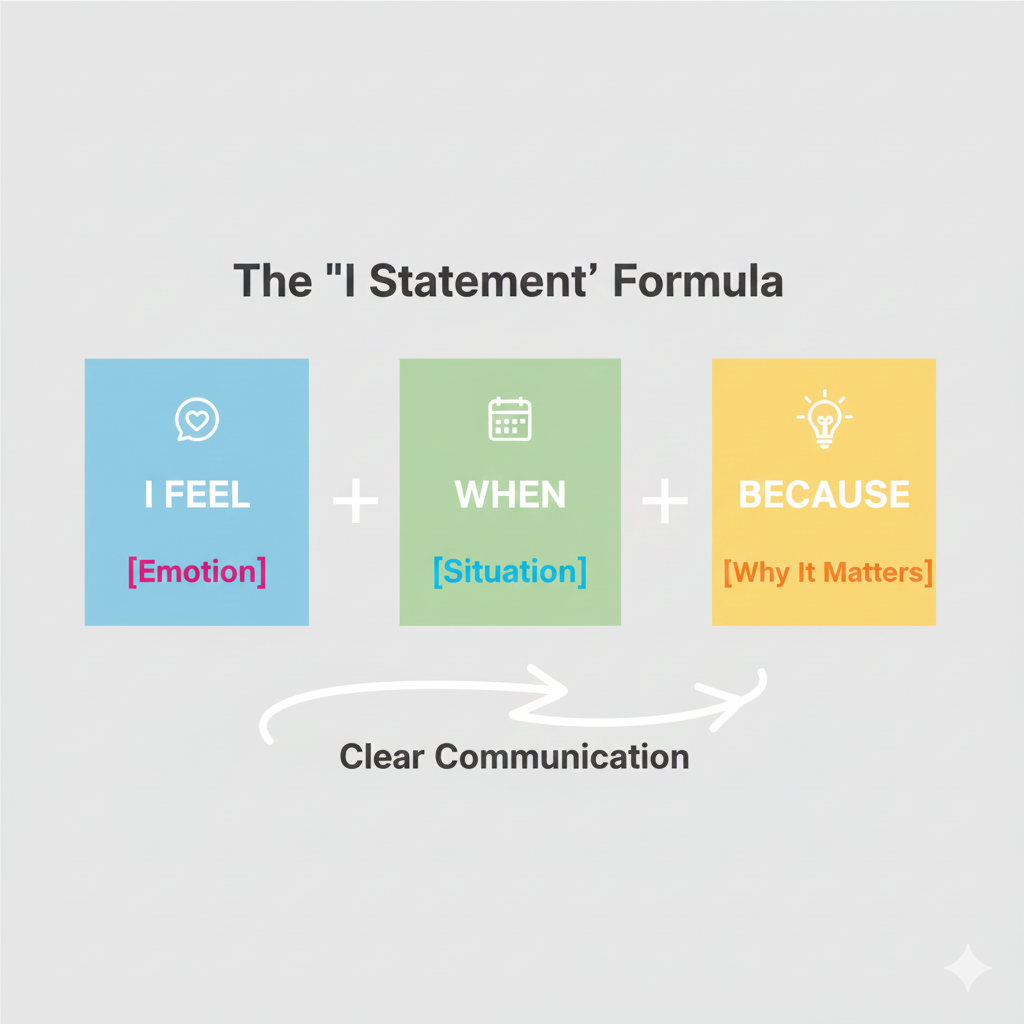
This is Communication 101, but it works. Instead of “You never listen to me” (accusatory and likely to start a fight), try “I feel unheard when I’m sharing something important and you’re on your phone.”
The formula:
- “I feel [emotion]…”
- “…when [specific situation]…”
- “…because [why it matters to you].”
Bonus points if you can add: “What would help me feel better is [specific request].” This gives your partner something concrete to work with instead of just feeling attacked.

4. Practice Active Listening (For Real This Time)
Active listening and empathy in relationships isn’t just nodding while you mentally rehearse your comeback. It’s:
- Reflecting back: “So what I’m hearing is that you felt overwhelmed when…”
- Asking clarifying questions: “Can you tell me more about what that was like for you?”
- Validating feelings: “That makes sense that you’d feel that way.” (Even if you disagree with their conclusion, you can validate their emotions.)
- Not interrupting: This one’s harder than it sounds. Let them finish.
When your partner feels truly heard, they’re way more likely to be open to hearing you in return. It’s not manipulation—it’s just how humans work.
Open Communication vs. Closed Communication: Know the Difference
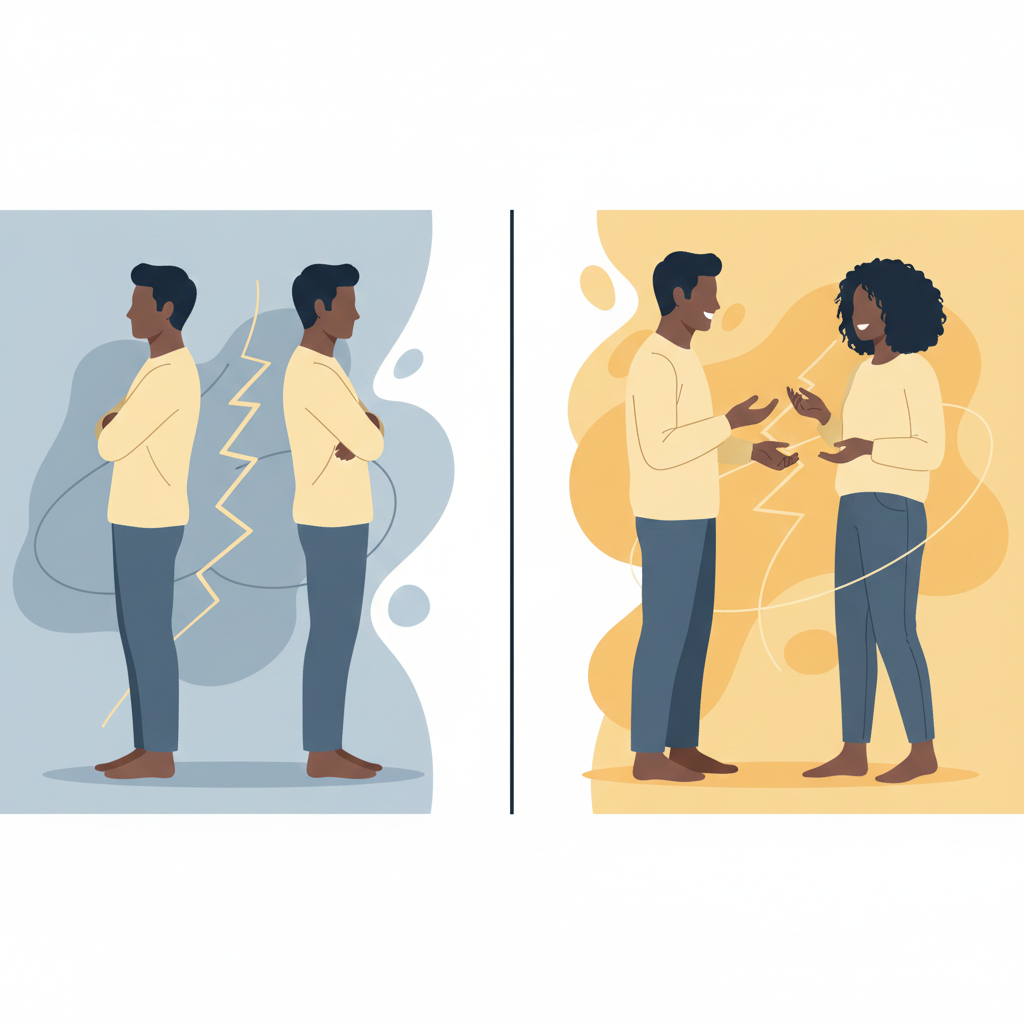
Let’s get real about what open communication actually looks like compared to its evil twin: closed or defensive communication. Because sometimes we think we’re being open when we’re really… not.
| Open Communication | Closed/Defensive Communication |
| “I felt hurt when you canceled our date night without much notice.” | “You ALWAYS cancel on me. You obviously don’t care.” |
| “I’m struggling with something. Can we talk?” | “I’m fine.” *clearly not fine* |
| “That’s a good point. I hadn’t thought of it that way.” | “Yeah, but…” *immediately dismisses your perspective* |
| Asks questions to understand better | Makes assumptions and attacks |
| Takes responsibility for their part | Blames the other person entirely |
Notice how open communication focuses on specific behaviors and feelings, while closed communication deals in absolutes (“always,” “never”) and attacks character rather than addressing actions.
Overcoming Communication Barriers in Relationships

Let’s talk about what gets in the way. Because even when you want to communicate openly, sometimes it feels impossible. Here are the usual suspects:
Fear of Conflict
Some people would rather eat glass than have a difficult conversation. If this is you (no judgment), remember: avoiding conflict doesn’t prevent it—it just delays it and usually makes it worse.
The fix: Start small. Practice having mildly uncomfortable conversations about low-stakes topics. “Hey, I’d actually prefer if we tried a different restaurant tonight” is less terrifying than “We need to talk about our future.” Build up your tolerance.
Different Communication Styles

Maybe you’re someone who needs to talk things out immediately, while your partner needs time to process. Neither is wrong—they’re just different.
The fix: Name your styles and find a compromise. “I know you need time to think, but can we agree to revisit this conversation tomorrow?” Meet in the middle.
Past Relationship Baggage
If your ex criticized you every time you were vulnerable, no wonder you’re gun-shy about opening up now. Totally understandable.
The fix: Be honest about this. “I want to share this with you, but it’s hard for me because of past experiences” gives your partner context and usually brings out their gentler side. And hey, therapy isn’t a bad idea either.
Nobody’s Really Listening
If you’re both just waiting for your turn to talk, you’re having parallel monologues, not a conversation.
The fix: Try the “speaker-listener” technique. One person shares for 2-3 minutes uninterrupted. The other person reflects back what they heard. Then switch. It feels awkward at first but actually works.
How to Talk About Difficult Topics With Your Partner
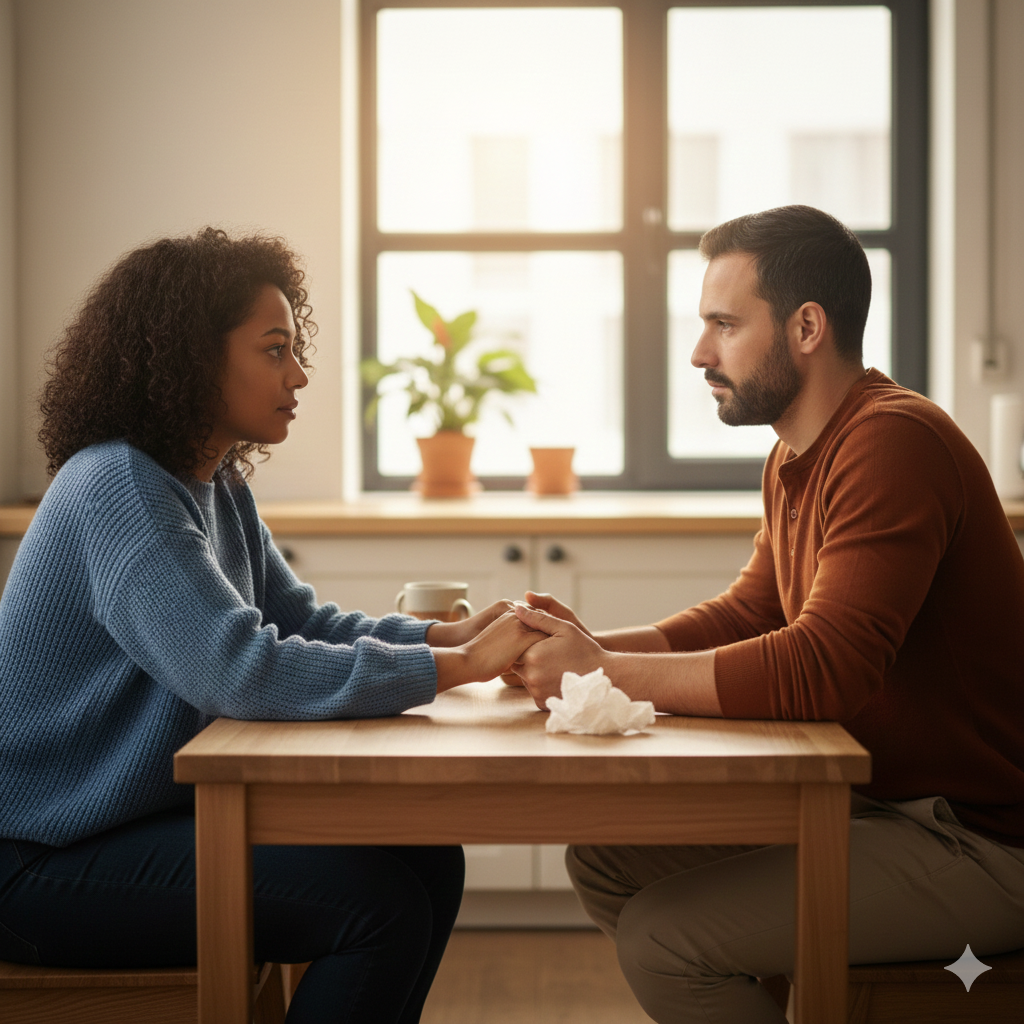
Okay, so you need to bring up something heavy. Money troubles. Sex issues. Whether to have kids. Your future. These conversations can make or break relationships, so let’s do them right.
The game plan:
- Pick your moment wisely. Not during a Netflix binge or right before bed. Find a time when you’re both rested and have privacy.
- Start soft. “There’s something important I’d like to talk about. Is now a good time?” gives them a heads-up without ambushing them.
- Use curiosity, not accusations. “I’ve been thinking about our financial goals. How do you see our future?” beats “You spend way too much money.”
- Be willing to hear hard truths. If you’re asking for honesty, you have to be ready to receive it—even if it stings.
- Take breaks if needed. “Let’s pause and come back to this in an hour” is totally valid if emotions are running high.
I won’t lie—these conversations are uncomfortable. But you know what’s more uncomfortable? Years of resentment because you never addressed the elephant in the room.
Can Open Communication Be Learned? (Spoiler: Absolutely)
Here’s the good news: effective communication in relationships is 100% a learnable skill. Nobody’s born knowing how to do this. We all have to learn it.
If you’re serious about leveling up your communication game, there are tons of resources. Let me share some favorites:
Books That Actually Help
- “Nonviolent Communication: A Language of Life” by Marshall B. Rosenberg – This is the gold standard for learning how to express needs openly and listen with real empathy. It’s structured, practical, and honestly life-changing if you stick with it.
- “Crucial Conversations” by Patterson et al. – Perfect for those high-stakes talks when you absolutely cannot mess up. Works for relationships, work, family—basically anywhere humans exist.
- “Just Listen” by Mark Goulston – All about deep listening strategies. Because sometimes the best way to communicate is to shut up and really hear the other person.
- “Difficult Conversations” by Stone, Patton, and Heen – Breaks down tough talks into manageable steps. Great for when you need to discuss sensitive topics without everything blowing up.
Courses and Workshops Worth Your Time
- “Talk Like You Love Each Other” by Relationships with Aly – Specifically designed for couples. Helps you recognize unhelpful patterns and build safer conversations.
- Personal Communication Skills Online Course (CTS College) – Covers core communication skills for both work and personal life. Good for building a solid foundation.
- Communication in Relationships Workshop (Relationships Australia WA) – Workshop format that introduces essential skills for clearer, more constructive communication in all relationships.
And honestly? Sometimes working with a couples counselor or therapist is the move. There’s zero shame in getting professional help to learn these skills. Think of it like hiring a personal trainer for your relationship.
Open Communication Beyond Romance: Friendships, Family & Work
Plot twist: everything we’ve talked about applies way beyond romantic relationships. Communication skills for healthy friendships and family relationships? Same principles.

In Friendships
That friend who always cancels last minute? Instead of silently resenting them, try: “Hey, I value our friendship, and I feel hurt when plans get canceled repeatedly. Can we talk about what’s going on?” Real friends can handle honest conversations
With Family
Family dynamics are tricky because there’s so much history. But open communication can transform even the most dysfunctional family patterns. “Mom, I know you mean well, but when you comment on my life choices, I feel like you don’t trust me. Can we find a better way to talk about this?”

At work
Communication at work benefits from the same skills. Being direct but respectful, actively listening, creating psychological safety—these aren’t just relationship skills. They’re human skills.
“I appreciate your feedback. To make sure I understand correctly, are you saying…?” This simple move prevents so many workplace misunderstandings.
Myths About Open Communication (Let’s Bust These)
- Myth 1: Open communication means sharing everything. Nope. You’re allowed to have private thoughts. Open communication is about sharing what matters for the health of your relationship, not providing a 24/7 livestream of your consciousness.
- Myth 2: If you have to work at communication, something’s wrong. False. Even the happiest couples have to actively maintain good communication. It’s not a sign of problems—it’s a sign of commitment.
- Myth 3: Open communication will prevent all conflicts. Also false. You’ll still disagree. The difference is you’ll disagree productively instead of destructively.
- Myth 4: Some people are just naturally good communicators. Eh, sort of? Some people might start with better models from their families. But everyone can learn and improve. Nobody’s born knowing how to use “I” statements.
Communication Exercises for Couples and Partners
Want to actually practice this stuff? Here are some exercises that don’t feel cheesy:

Daily Check-ins (5 Minutes)
Every day, take five minutes to answer:
- What was your high today?
- What was your low?
- What do you need from me right now?
Simple, but it keeps you connected and prevents small issues from festering.
Weekly Appreciation Practice
Once a week, tell your partner three specific things they did that you appreciated. Not vague stuff like “You’re great”—actual behaviors. “I appreciated when you did the dishes without me asking” or “Thank you for listening when I vented about work.”
Positive communication builds trust and makes the hard conversations easier.
The Conflict Rewind
After a fight, once you’ve both cooled down, replay it together. What triggered it? What did each of you need? What could you have said differently? Treat it like game film—analyze it without blame to get better for next time.
The Bottom Line: Why This Matters

Look, I’m not going to pretend that mastering open and honest communication will magically solve all your relationship problems. Life is more complicated than that.
But here’s what I know for sure: every strong relationship I’ve ever seen—romantic, platonic, professional—has this skill at its core. The ability to say what you mean, hear what others mean, and create space for both honesty and kindness.
It’s not about being perfect. It’s about being real. About choosing connection over convenience. About having the courage to be vulnerable and the wisdom to hold space for someone else’s vulnerability too.
Whether you’re in a brand new relationship trying to build a solid foundation, a long-term couple working through a rough patch, or just someone who wants better friendships—building trust through open communication is the work that makes everything else possible.
So start small. Pick one thing from this article and try it this week. Have that five-minute check-in. Use an “I” statement instead of an accusation. Actually listen instead of just waiting to talk.
Your relationships—all of them—will thank you.
Ready to Transform Your Communication?
Start your journey toward healthier, more connected relationships today. Whether through books, courses, or professional guidance, investing in your communication skills is investing in every relationship you have.
What’s one conversation you’ve been avoiding? Maybe today’s the day to have it.